Subterranean termites nest beneath the frost line in moist soils and tunnel through damp foundational framing, causing silent structural degradation behind drywall and beneath sill plates. In neighborhoods like…
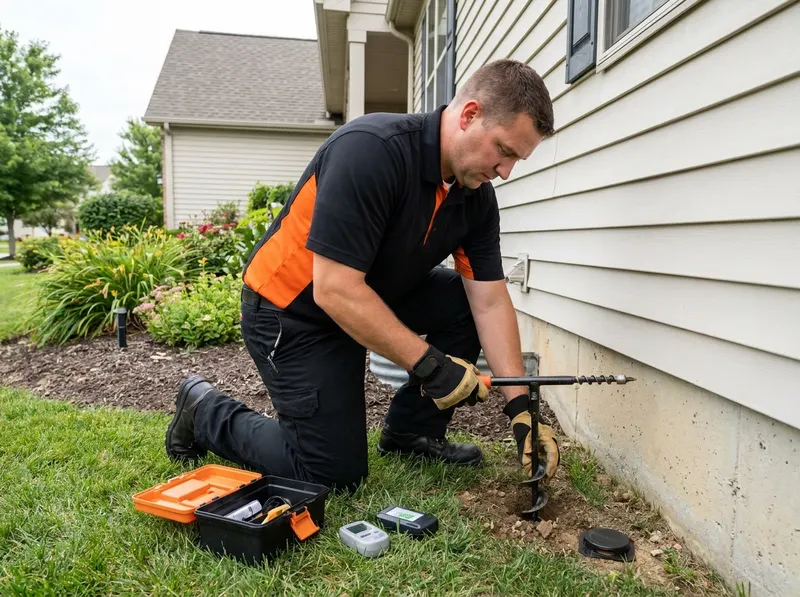
Subterranean termites nest beneath the frost line in moist soils and tunnel through damp foundational framing, causing silent structural degradation behind drywall and beneath sill plates. In neighborhoods like Jefferson Run, Woods at Jefferson, and Havens Corners, heavy glacial clay soils hold persistent spring moisture, driving subterranean colonies toward residential foundation footings. A proper defense relies on non-repellent liquid termiticides bonded directly to the foundation perimeter or discrete bait stations embedded in turf. The United States Environmental Protection Agency establishes federal application standards for termiticides, ensuring chemical treatments bond tightly with local soil profiles rather than leaching into groundwater tables. Applying liquid termiticide creates a continuous treated zone along foundation walls, whereas bait systems utilize insect growth regulators to eradicate subterranean colonies through natural social food sharing. ForestVale Pest Response examines construction joints, brick ledges, and plumbing penetrations to identify active mud tubes before selecting a targeted remediation pathway.
Selecting between baiting stations and direct liquid barrier applications depends entirely on structural construction and landscaping proximity. Direct trenching and soil injection create immediate non-repellent chemical boundaries that disrupt workers moving between structural wood and ground nests, making it suitable for monolithic slab foundations in Pinecrest or Broadview Heights. Conversely, properties bordering wooded corridors near Blacklick Woods Metro Park or Blacklick Ridge benefit from perimeter monitoring stations, which intercept foraging subterranean termites before they reach exterior masonry. According to the Ohio State University Extension, eastern subterranean termites swarm during warm spring afternoons following rainfall events, making seasonal perimeter defense critical. Liquid barriers demand physical trenching along finished beds, while monitoring stations require ongoing semi-annual station checks to document colony activity.
Structural termite management operates through five sequential operational phases:
Regulatory compliance and environmental protection remain paramount during subterranean wood-destroying organism interventions. Soil applications must comply with guidelines established by the Ohio Department of Agriculture to protect non-target organisms and nearby watersheds like Blacklick Creek. Technicians reference structural standards outlined by the International Association of Certified Home Inspectors to differentiate insect feeding damage from fungal wood decay. Building owners can review wood durability research compiled by the USDA Forest Products Laboratory to identify how relative humidity elevates termite vulnerability in sill framing. For health and safety protocols regarding application safety, technical reference points include the Occupational Safety and Health Administration guidelines and structural pesticide standards indexed by the California Department of Pesticide Regulation. Further ecological guidance on non-target risks is maintained by the U.S. Fish and Wildlife Service, while building envelope protection practices align with the International Code Council. Structural treatment options are also cross-referenced with pest biology data maintained by the University of Kentucky Department of Entomology. ForestVale Pest Response confirms exact project dimensions and treatment depths on-site before performing chemical or physical installations. Inquiries and scheduling can be directed to (380) 255-6028.
Every job gets a firm, written price after an on-site visit.
Tell us about your termite defense and monitoring job in Blacklick and we'll send a clear, written quote, usually the same day.
 ForestVale Pest Response