Carpenter ant structural abatement in Blacklick addresses Camponotus pennsylvanicus infestations that exploit moisture-compromised timbers near exterior perimeters. Subdivisions built near natural water corridors, such…
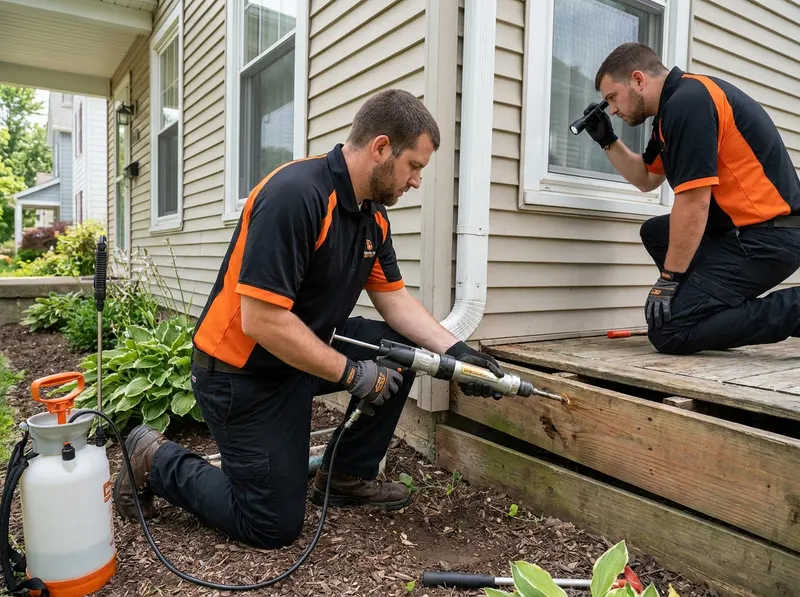
Carpenter ant structural abatement in Blacklick addresses Camponotus pennsylvanicus infestations that exploit moisture-compromised timbers near exterior perimeters. Subdivisions built near natural water corridors, such as properties in Woods at Jefferson, Jefferson Run, and Blacklick Ridge, face recurring foraging trails from mature parent nests located in external oak and maple canopies. According to biological data from the Purdue University Department of Entomology, carpenter ants do not consume cellulose like subterranean termites; rather, they excavate clean galleries along structural grain lines to establish secondary satellite nurseries. In neighborhoods bordering the humid canopy of Blacklick Woods Metro Park or properties along Havens Corners Road, roof valley leaks and condensation behind synthetic exterior insulation allow satellite colonies to weaken framing without producing visible exterior soil tubes.
Effective structural abatement follows a deliberate chronological protocol. Step 1 begins with thermal imaging and pin-type acoustic tracking to map structural galleries hidden behind drywall, baseboards, and window lintels. Step 2 requires drilling small 1/8-inch access points into targeted wall plates and injecting non-repellent aerosolized desiccant or micro-foams, adhering to application safety standards registered through the EPA Pesticide Registration division. Step 3 involves deploying transfer-active bait formulations containing fipronil or indoxacarb, which foraging workers carry directly to the queen. Step 4 applies a non-repellent exterior ground perimeter treatment along the foundation line to intercept secondary trails traveling from yard trees, regulated under the Ohio Department of Agriculture Pesticide Regulation. Step 5 seals exterior envelope penetrations around plumbing lines and soffit junctions using copper mesh and elastomeric caulking to stop future trail re-entry.
Diagnostic decisions depend directly on colony maturity. Single-room carpenter ant discoveries in newer construction like Saddle Run or Pinecrest frequently represent isolated satellite nests that require spot void injection and exterior perimeter sealing. Conversely, multi-story activity across older additions in Broadview Heights or Taylor Woods often indicates systemic moisture rot requiring dual-phase baiting, internal void aerosolization, and carpenter-level moisture repair. Homeowners facing indoor frass, fine wood shavings mixed with insect fragments, can consult guidelines from the University of Kentucky Entomology office to distinguish ant shavings from termite damage. Structural timber standards set by the American Wood Council show that persistent gallery excavation over 24 to 36 months reduces structural load capacities in floor joists. ForestVale Pest Response provides structural identification and targeted chemical abatement without locking homeowners into mandatory multi-year maintenance packages. Safe handling procedures follow rules established by the Occupational Safety and Health Administration to protect household occupants and pets during indoor applications. Additional technical guidance from the National Park Service Integrated Pest Management program informs our targeted exclusion methods, ensuring chemical volume remains confined to structural voids. For property boundaries bordering damp soils near Franklin Soil and Water Conservation District easements, our exterior applications remain calibrated against ground wash-off risks.
Every job gets a firm, written price after an on-site visit.
Tell us about your carpenter ant structural abatement job in Blacklick and we'll send a clear, written quote, usually the same day.
 ForestVale Pest Response